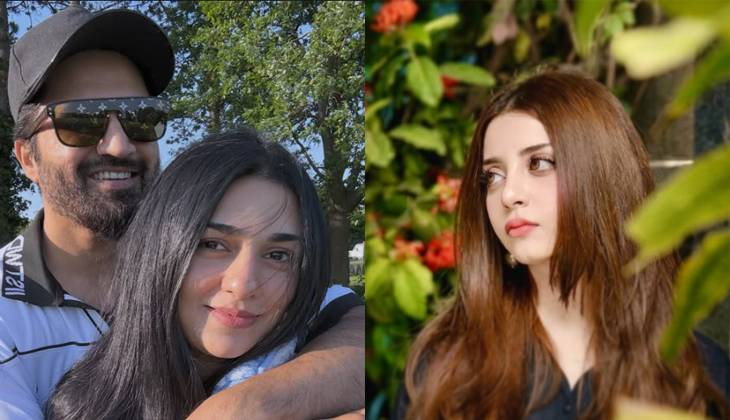
Pakistani actress Sarah Khan has once again drawn public attention after reacting to ongoing online discussions involving actress Alizeh Shah and singer Falak Shabir.
The situation began after Falak Shabir expressed his views calling for restrictions on revealing clothing in public spaces. He stated that his concerns were linked to cultural values and his responsibilities as a father. His remarks quickly sparked widespread debate online, with many social media users criticizing the statement and arguing that broader issues such as harassment, violence against women, and gender inequality require more urgent attention.
The controversy intensified when Alizeh Shah shared her own account on social media, alleging that she was made to wear short outfits and perform romantic scenes in a music video despite having reservations. Her comments further fueled discussion about consent, creative boundaries, and industry practices in entertainment.
As the debate continued across social platforms, Sarah Khan reacted to a commentary video discussing the situation. In her response, she posted a laughing emoji, which quickly caught public attention and added another layer to the ongoing conversation.
The commentary video suggested that Falak Shabir’s statements were being misinterpreted and that criticism of cultural norms should not automatically be seen as criticism of women. This perspective itself became part of the broader online debate, with divided opinions emerging from both supporters and critics.
Sarah Khan has also previously shared her thoughts on feminism, empowerment, and social responsibility through Instagram stories. While supporting women’s rights, education, and equality, she has emphasized that progress should remain aligned with cultural values, dignity, and respect.
The discussion has since expanded beyond the original remarks, with audiences reacting strongly across social media platforms. Some users supported Alizeh Shah’s concerns about industry practices, while others defended Falak Shabir’s cultural standpoint, making it one of the more widely discussed entertainment controversies in recent weeks.
The situation reflects the growing sensitivity around public statements made by celebrities in Pakistan, where discussions about culture, feminism, and media representation often generate intense online engagement.